

By Joyce White, www.atasteofhistory.net
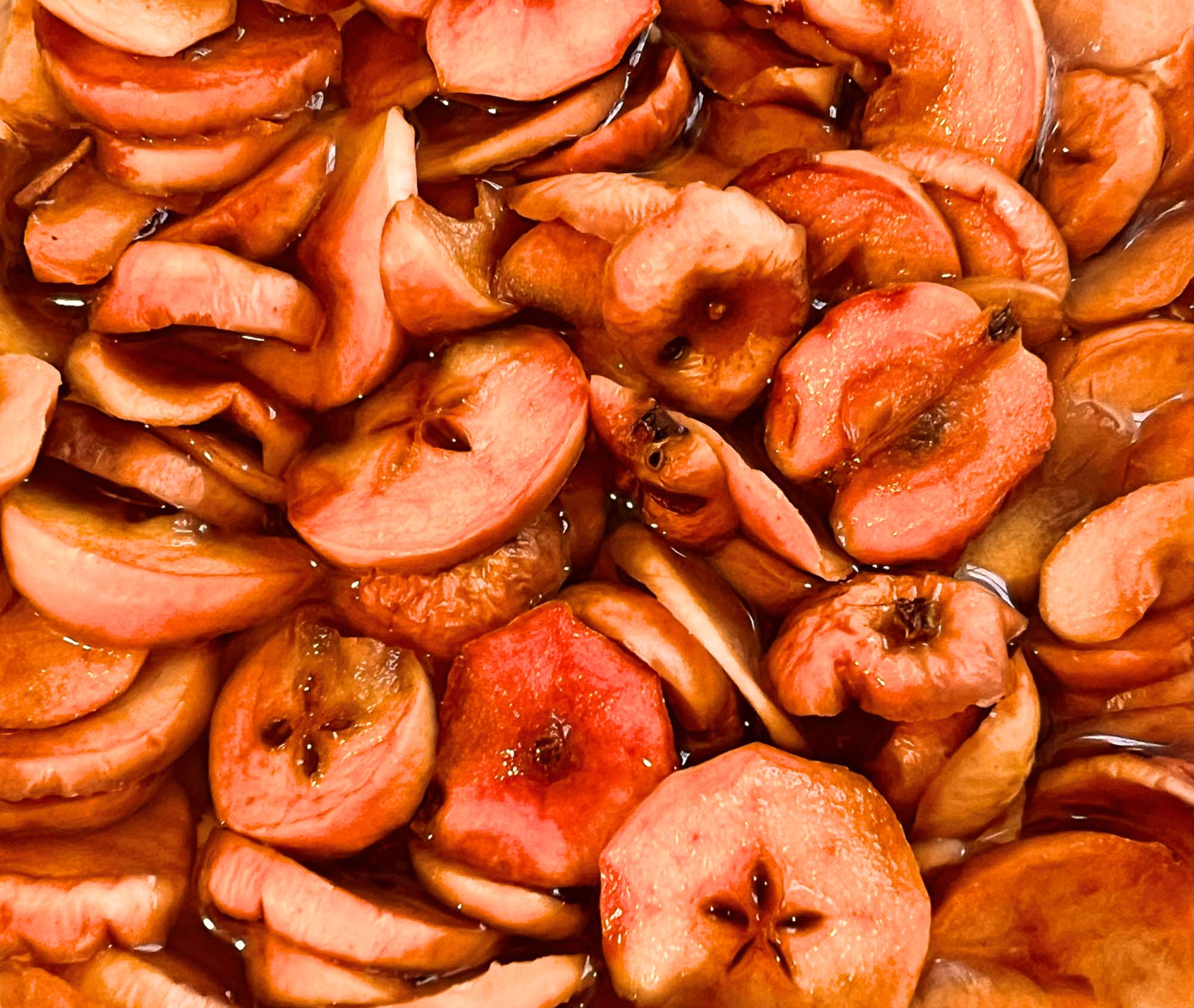
As the cool autumn breeze rustles through the apple orchards, one can almost imagine the generations before us gathering a different type of apple, the small but mighty crabapple. Crabapple is a term applied to any species of small sour apples in the genus Malus, either wild or cultivated. In Maryland, two species, Malus coronaria (sweet crab apple) and Malus angustifolia (southern crab apple) were the most common types consumed by indigenous Marylanders, particularly those in the Piedmont region of central Maryland, in Garrett County, and on the Eastern Shore. In addition, European settlers imported varieties of crabapples from far-flung locales such as Siberia.
The recipe for Spiced Crabapples found in Maryland’s Way, The Hammond-Harwood House Cook Book (1963) brings us back to a time when every ingredient was thoughtfully chosen and every dish had a story to tell. From Mrs. Crain and Miss Ann Chase in c. 1811 Annapolis, this recipe takes us on a flavorful journey that begins with just five pounds of Siberian Dolgo crabapples and some classic ingredients like whole cloves, cinnamon, and cider vinegar.
| Spiced Crabapples Mrs. Crain’s Way, Miss Ann Chase’s Book, 1811, Annapolis – 5 pounds Dolgo crabapples – whole cloves – 7 cups sugar – 2 cups cider vinegar – 2 cups water – 2-4 sticks cinnamon Choose apples which are colored but just ripened, not mellow. Rinse well, leaving stems on. Stick a whole clove in blossom end of each apple. Bring to a boil in a large kettle with the sugar, vinegar, water and cinnamon. Add apples and boil gently, turning apples in syrup until they are tender when pricked. Pack into clean, hot quart jars. Cover with boiling syrup and seal. |
What’s so special about crabapples?
Well, crabapples are not your typical sweet, juicy apples; they carry a sour punch. Despite their tartness, they have played a vital role in Maryland’s food culture for centuries. Native crabapples were an indigenous staple ingredient, whose culinary uses were passed down through the ages. For example, Dawn Manyfeathers, a member of the Lenape Tribe, understands well how to use crabapples. In her c. 2002 cookbook, she notes that crabapples are good sources of pectin which, when mixed with other fruits, helps them gel into a thick sauce.
European settlers were quite familiar with crabapples, too. In the famed lost colony of Roanoke in North Carolina, Thomas Hariot, a man who visited the colony in the late 1580s and then published his observations about his experience in 1590, remarked that the “applecrabs” he saw there were “ … such as we have in England.” The British used crabapples in the medieval and early modern eras to make verjuice, a type of slightly sour condiment similar to vinegar. British cooks also historically used crabapples to make syrup, jelly, and preserves.
An Enslaved Legacy
One can’t overlook the deep historical connection between crabapples and the enslaved African American population who labored on Maryland’s plantations. At Rose Hill Plantation in Cecil County, enslaver Martha Ogle Forman kept a watchful eye over workers like Boston who played an integral role in food and drink production – especially when it came to crab apple cider. In her c. 1814-45 plantation journal, Forman noted the day “Boston bottle[d] our crab cider.” Through this journal, we catch a glimpse of the skilled hands that created what was described as a “very fine” cider.
Forman also noted a recipe for Preserving Siberian Crabapples which she made alongside her enslaved workers. She served this recipe to visitors on Aug. 15, 1836. She wrote that she presented her guests with “a beautiful display of fruit. Peaches, Pears, apples, gages, two kinds of large purple plums and some beautiful Siberian Crab Jelly. The day went off very pleasantly, everybody appeared to enjoy themselves.”
The enslaved individuals who worked for Forman not only carried out the work but also preserved and adapted culinary traditions, leaving an indelible mark on Maryland’s food history.
A Modern Revival
Today, Spiced Crabapples are more than just a nostalgic treat. They represent a fusion of past and present, a dish that connects us to Maryland’s rich history. Whether you’re preparing these apples to share at a dinner party or just enjoying them as a cozy snack, the tradition lives on.
Crabapples may be small, but their story is anything but. So, next time you bite into one of these spiced delights, remember – you’re tasting a piece of Maryland’s diverse heritage.
Joyce White, a food historian, can be contacted through www.atasteofhistory.net.

Please support OutLook by the Bay with a subscription.
OutLook by the Bay magazine and this website are made possible through the support of our advertisers and subscribers. We guarantee you’ll learn something new each issue. Please subscribe today.