

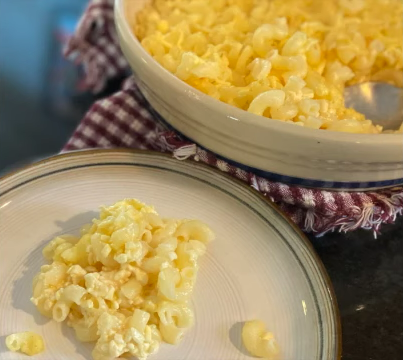
Macaroni and cheese has been a beloved staple in American cuisine for over 200 years, yet the version we know and love has evolved significantly from its historical origins. While Thomas Jefferson is often credited with introducing macaroni and cheese to the United States, its roots extend much further back – to medieval Europe, where early variations of the dish first emerged.
The European Beginnings
The earliest known recipe resembling macaroni and cheese dates to 15th-century England, not Italy. It appears in “Liber Cure Cocorum” (c. 1430), a cookbook from Lancashire. This medieval recipe called for pasta dough made from white bread soaked in broth, which was then shaped into lozenges, dried, and later boiled. Once cooked, the pasta was layered with cheese and spiced with cinnamon, nutmeg, cloves, and ginger, creating a dish both savory and aromatic.
Interestingly, this British recipe bears similarities to several pasta dishes found in “The Art of Cooking” (c. 1475) by Martino of Como, a celebrated Renaissance chef. His book details recipes for macaroni, vermicelli, and ravioli, featuring an assortment of cheeses, including Parmesan and Provatura, a predecessor to buffalo mozzarella. These connections suggest that the English recipe may have been influenced by earlier, unrecorded Italian culinary traditions.
Thomas Jefferson and the American Adoption
Though Jefferson did not invent macaroni and cheese, he played a significant role in popularizing it in America. During his time in Europe, his secretary, William Short, acquired a pasta-making mold in Naples in 1789. Jefferson documented its design and how to produce pasta, even sketching the device. However, there is no evidence it was ever used at Monticello, as records indicate that pasta was imported along with other Italian delicacies like Parmesan cheese and olive oil.
Despite this, Jefferson’s love for macaroni dishes is well recorded. He famously served a pasta-based dish at the White House in 1802. Federalist senator Manasseh Cutler described the meal, referring to a “pie called macaroni” with a strong, unfamiliar taste. The precise recipe remains unknown, but one handwritten family recipe, likely from either Jefferson’s great-granddaughter or another family member, Mary Randolph, author of “The Virginia Housewife” (1824), has survived:
“Boil as much macaroni as will fill your dish, in milk and water till quite tender, drain it on a sieve, sprinkle a little salt over it, put a layer in your dish, then cheese and butter as in the polenta, and bake it in the same manner.”
The Evolution of an American Favorite
By the mid-19th century, macaroni dishes had proliferated in both American and British cookbooks. The dish was prepared in a variety of ways, from soups and gratins to sweet puddings. One particularly intriguing early American recipe comes from Ann Maria Morris of Baltimore, Maryland, in her c. 1824 manuscript:
“Boil half a pound of Italian macaroni in milk & water till soft but not broken. Drain & cool it on a sieve. Scrape or grate a full quarter pound of good cheese, put alternately in your dish, layers of Maccaroni & cheese, with small lumps of fresh butter, seasoned with nicely mustard & cayenne pepper, a good deal of both – Bake it from 15–20 minutes.”
This recipe closely resembles the Jefferson/Randolph version but introduces mustard and cayenne pepper, a spice introduced to America by African Americans, and foreshadows the bold flavors found in more modern variations.
A Dish That Stands the Test of Time
From its medieval European origins to its widespread popularity in America, macaroni and cheese has undergone numerous transformations while maintaining its essence as a comforting, cheesy delight. Whether enjoyed as a simple baked dish or dressed up with gourmet ingredients, its rich history and enduring appeal make it a timeless classic on dinner tables worldwide.
Joyce M. White, a food historian, may be reached at www.atasteofhistory.net.
Maccaroni by Ann Maria Morris: Modern Recipe Adaptation
Ingredients:
- 2 quarts water
- 1 quart milk
- ½ pound Tubetti or elbow macaroni
- 4 tbsp. salted butter, softened
- 1 tsp. prepared Dijon mustard
- ¼ tsp. ground cayenne pepper
- 4-ounces grated Cheddar, Cheshire, or Parmesan cheese
Directions:
- Preheat Oven to 400 degrees
- Grease a 9 inch x 12 inch baking pan, or similar in size
- In a large stock pot, bring the water and milk to a gentle boil and add the macaroni. Lower the heat to prevent the water/milk from boiling over. Stir frequently to prevent sticking. Cook macaroni for about 8 minutes (do not overcook).
- Drain the macaroni, reserving about ¼ cup of the water/milk mixture and pour the drained macaroni back into the pot.
- In a large mixing bowl, mix together the macaroni, butter, Dijon mustard, and cayenne pepper. Stir together. Mix in about ¼ cup of the grated cheese.
- Layer the baking dish with half the macaroni and then half the remaining cheese. Repeat layering process once more.
- Bake in a 400-degree oven for 18 minutes, until top starts to become golden in color and a bit bubbly.

Please support OutLook by the Bay with a subscription.
OutLook by the Bay magazine and this website are made possible through the support of our advertisers and subscribers. We guarantee you’ll learn something new each issue. Please subscribe today.
