
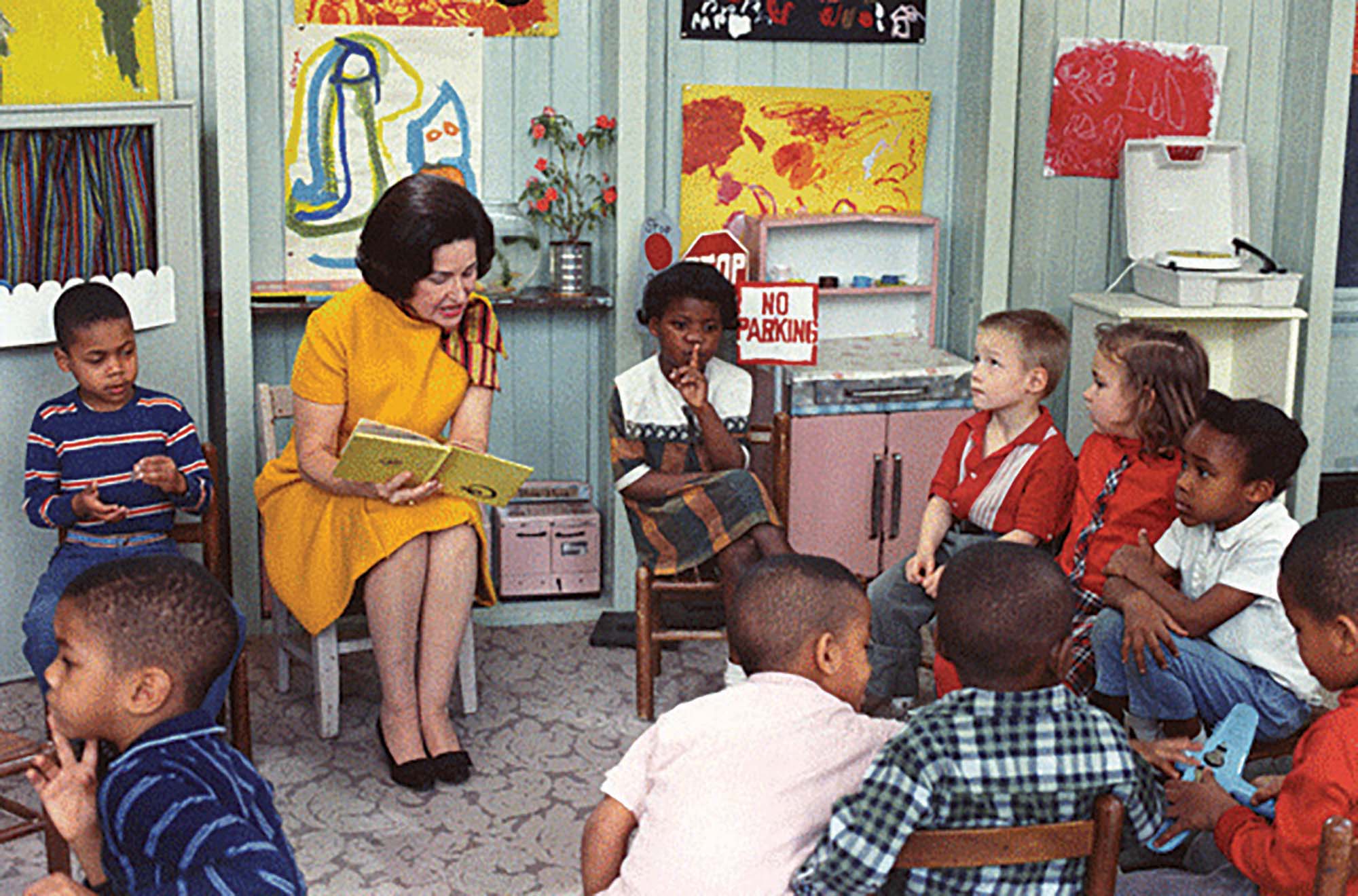
In 1964, when LBJ became our 36th President in a landslide victory, not much was known about his wife, Lady Bird. Pictures of her standing next to her larger than life husband show a woman who appears demure, poised and compliant. But beneath the surface, Lady Bird had a mission. She wanted to make America beautiful again.
Born Claudia Alta Taylor in 1912, she was given the nickname “Lady Bird” from her nursemaid who said, “She’s as purty as a lady bird.” She grew up on the outskirts of Karnack, Texas in “The Brick House,” an antebellum plantation home. Her father, Thomas Jefferson Taylor, was a wealthy businessman who owned two general stores and 15,000 acres of cotton. Her mother, Minnie, scandalized the family by entertaining Black people in their home, a stark contrast to her father’s feudal attitude that they were “hewers of wood and drawers of water.”
At the age of five, after her mother fell down a flight of stairs and died from complications of a miscarriage, Lady Bird was largely raised by her aunt Effie. While she found solace in the wildflowers, plants, meadows and bayous of East Texas, it was Effie who inspired her lifelong love of the outdoors.
“She opened my spirit to beauty,” Lady Bird later recalled.
Shortly after she graduated from the University of Texas in the summer of 1934 with a history and journalism degree, Lady Bird met LBJ. The next day, they had their first date and, by nightfall, he proposed to her.
“I felt like a moth drawn to a flame,” she told biographer Jan Jarboe Russell.
LBJ was unlike anyone she had ever met before. But she wasn’t ready to get married. At the time, she thought about teaching in Alaska or Hawaii. To win her over, LBJ gave her what came to be known in political circles as “The Johnson treatment,” an intimidating tactic to get the votes necessary to pass the Civil Rights Act in 1964.
He was relentless and, for the next 10 weeks, bombarded her with phone calls and letters. On Nov. 16, 1934, LBJ showed up at her door with an ultimatum. The next day, they were married in a rushed ceremony in San Antonio, Texas, where he placed a $2.50 ring from Sears Roebuck on her finger.
On environmental issues, the pair were a match made in heaven. In his first State of the Union address on Jan. 4, 1965, LBJ conveyed his “green legacy for tomorrow.”
He told the American people that he wanted to seek legal power to prevent pollution of our air and water, step up efforts to control harmful wastes, clean up our contaminated rivers, and create more parks and open spaces than any other period in our history.
Ultimately, Lady Bird was the driving force behind his environmental legislation. She was not only the inspiration but the instigator and advocate. Together, they would eventually sign into law more than 200 conservation measures to protect the nation’s land, water and air.
To showcase her vision for the country, Lady Bird set her sights on Washington, D. C. She formed a coalition of people whose efforts inspired its citizens to take action. Groups gathered to clean up the shorelines of the nearby creeks. She established Public Pride to reduce litter and control the rat population in the slums. Rather than being torn down, historic buildings were renovated and turned into recreational and community facilities.
While she did much for our nation’s capital, it was the Highway Beautification Act, signed into law on Oct. 22, 1965, that she is best known for. Nicknamed “Lady Bird’s Bill,” this pet project included restrictions on billboards, a feat unto itself given she was up against the Outdoor Advertising Association of America who repeatedly tried to block the bill. Unsightly junkyards were removed and screened, wildflowers planted, and native grasses were restored along interstate and major highways.
In 1968, after she left the White House, her public service continued for almost 40 years. In her beloved hill country of Texas, Lady Bird focused on enhancing the scenery along the highways. She also led the making of a 10-mile trail around Town Lake, later named Lady Bird Lake.
“She recognized that this was about something far bigger than one political party or one political philosophy,” recalled her daughter, Luci Banes Johnson. “It was about this gorgeous land that unites us and maybe we better figure out how we’re going to preserve it.”
Perhaps Interior Secretary Stewart Udall said it best. “Not only did she plant wildflowers, she planted environmental values in the hearts of citizens and decision makers, and that is really her legacy.”
Kater can be reached at [email protected].

Please support OutLook by the Bay with a subscription.
OutLook by the Bay magazine and this website are made possible through the support of our advertisers and subscribers. We guarantee you’ll learn something new each issue. Please subscribe today.
