

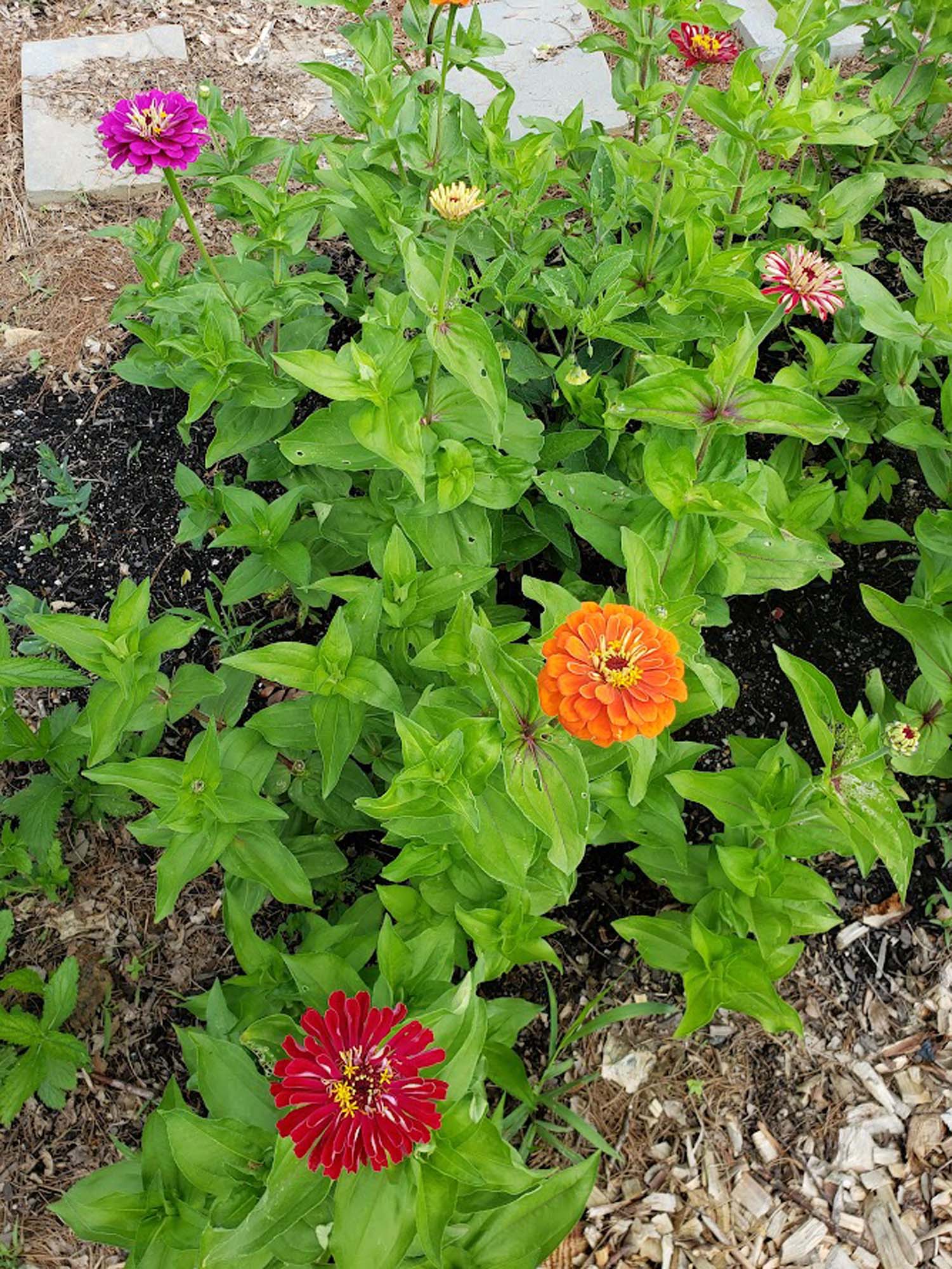
If you love having fresh flowers in the house, but don’t want to have to buy from the grocery store or order from a florist, consider growing your own. With just a little planning, you can have beautiful blooms for many months in the mid-Atlantic. Here are steps you can take to grow your own cutting garden.
Planning
First, plan. How much space do you have? Even a small area can yield many blooms if you plan carefully. Let’s say you have a space that is eight feet by eight feet. You could plan two rows of three feet each with a two foot path down the center. Dividing each side into four sections that are two feet long and three feet wide gives you six square feet in each section.
Consider where to place the cutting garden, too. Most annual flowers prefer full sun. If this is truly to be a cutting garden, place your garden where you won’t see it. Placing it out of sight makes it easier to cut the flowers to bring indoors.
Purchasing Seeds
Seeds are relatively inexpensive, are readily available, and offer a wide variety of flowers for your selection. If this is your first flower garden, the simplest method is to choose annual seeds. Annual flowers grow, bloom, and die all in one year. Even if you are an experienced gardener, choosing annuals will give you a blank slate for next year’s garden. That way, you can trial different things, decide which you like, and clear everything away for next year’s garden. Johnny’s Seeds is an excellent online company, and their website has a wealth of information for each variety. www.johnnyseeds.com
Consider how much space you have. Most annual flowers planted for cutting need to be spaced 9” apart. This is often closer spacing than is recommended for a garden, but closer spacing is fine if you are harvesting regularly. In the example above, if you have eight sections totaling six square feet each, using nine inch spacing, you could expect to have 12 plants in each section.
Prepping the Ground
One of the easiest ways to start a garden is to use the no-till method, also known as lasagna gardening. Mark off the area for growing with garden stakes and string. Place cardboard or six layers of newspaper to cover the ground. Use a hose to wet it down. Then pour a mix of top soil and compost on top of that. You can easily plant seeds right into this soil mix.

Planting Seeds
Every seed variety has different needs. Some need to be covered to sprout, so you press them into the soil and cover with more soil. Some need light to grow, so you sprinkle on top of the soil and leave them uncovered. If you purchase your seeds from a reputable company, you will easily find this information on their website and on the seed packet. Take time to read this information, as it will help you start your seed babies with the care they need. For most summer annuals, you want to wait to plant until Mother’s Day, which is typically when we no longer need to fear frost in the mid-Atlantic.
After planting, water the seeds well. If it doesn’t rain much that week, make sure you water again. Most plants need an inch of rain a week. It’s helpful to note the spacing for each section, as that will make it easier to spot weeds that sprout between your seeds. Weeds are definitely easier to pull when they are small, so inspect your garden every few days to pull them before they become a problem.
Pinching
Some plants need to be pinched, which means snipping a small section off the top of the plant. This is usually done when the plant has a few sets of leaves. Pinching makes the plant bushier and branching, which means the plant will produce more flowers. Again, check the seed packet or website to see if the varieties you planted need to be pinched.

Harvesting
Some annuals are called “cut and come again” – this means they will keep producing new blooms so long as you harvest regularly. It’s a good idea to choose two days a week when you will harvest so that it becomes a habit. Each cut signals the plant to keep producing flowers, instead of seed.
Cut Flower Varieties
When deciding what to plant, consider including focal flowers, fillers, and greenery. Having some of each will give you the ability to design beautiful bouquets for many months.
Focal flowers draw the eye and take up more space in the bouquet because of their size. Some easy to grow focal flowers are marigolds, sunflowers, and zinnias.
Filler flowers play an important supporting role, adding color, depth, and texture to the vase. Celosia loves the summer heat, and the many hues and forms available make this a top filler flower. Dill is fragrant and has beautiful, large flower heads with tiny dots of yellow. Statice offers many colors and a long vase life – in fact, it stays as beautifully vibrant when dried as when freshly picked.
Greenery adds weight and size to your bouquet, as well as an airy, garden look. Basil is a terrific filler, especially Mrs. Burns Lemon Basil. Cress is a fast grower, and you can plant it several times for a succession of greens.

There are many wonderful books to help you plan your cutting garden. Here are a few of my favorites: “An American Cutting Garden” by Suzanne McIntire; “The Cut Flower Handbook” by Lisa Mason Ziegler; “The Cutting Garden: Growing and Arranging Flowers” by Sarah Raven; “Growing Flowers: Everything You Need to Know About Planting, Tending, Harvesting and Arranging Beautiful Blooms” by Niki Irving.
Good luck with your garden! Drop me a line and tell me how your garden grows at [email protected].
Lisa Derx is a member of the American Daffodil Society, Membership Chair for the National Capital Dahlia Society, President of Chesapeake Flower Exchange, Local Flowers Liaison for the Independent Floral Designers Association, and a member of the Association of Specialty Cut Flowers, and the Maryland Cut Flower Growers Association. Her home is in Dayton, Maryland, where she lives and grows flowers with her husband Dan and cat, Sebastian.

Please support OutLook by the Bay with a subscription.
OutLook by the Bay magazine and this website are made possible through the support of our advertisers and subscribers. We guarantee you’ll learn something new each issue. Please subscribe today.